


























A spacecraft deliberately crashed into an asteroid left a crater the size of a sports stadium – and sent the space rock tumbling chaotically through space.
The European Space Agency said the mission is “humankind’s first planetary defence experiment” and is designed to help scientists work out how to stop an asteroid from hitting Earth.
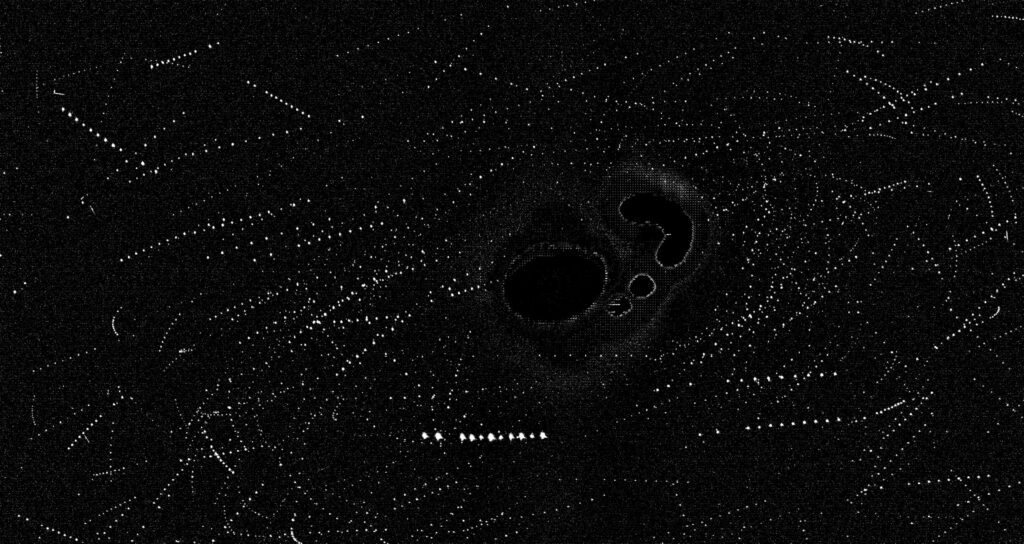
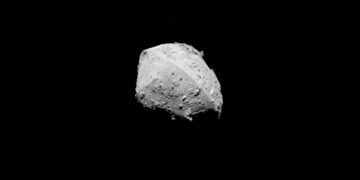
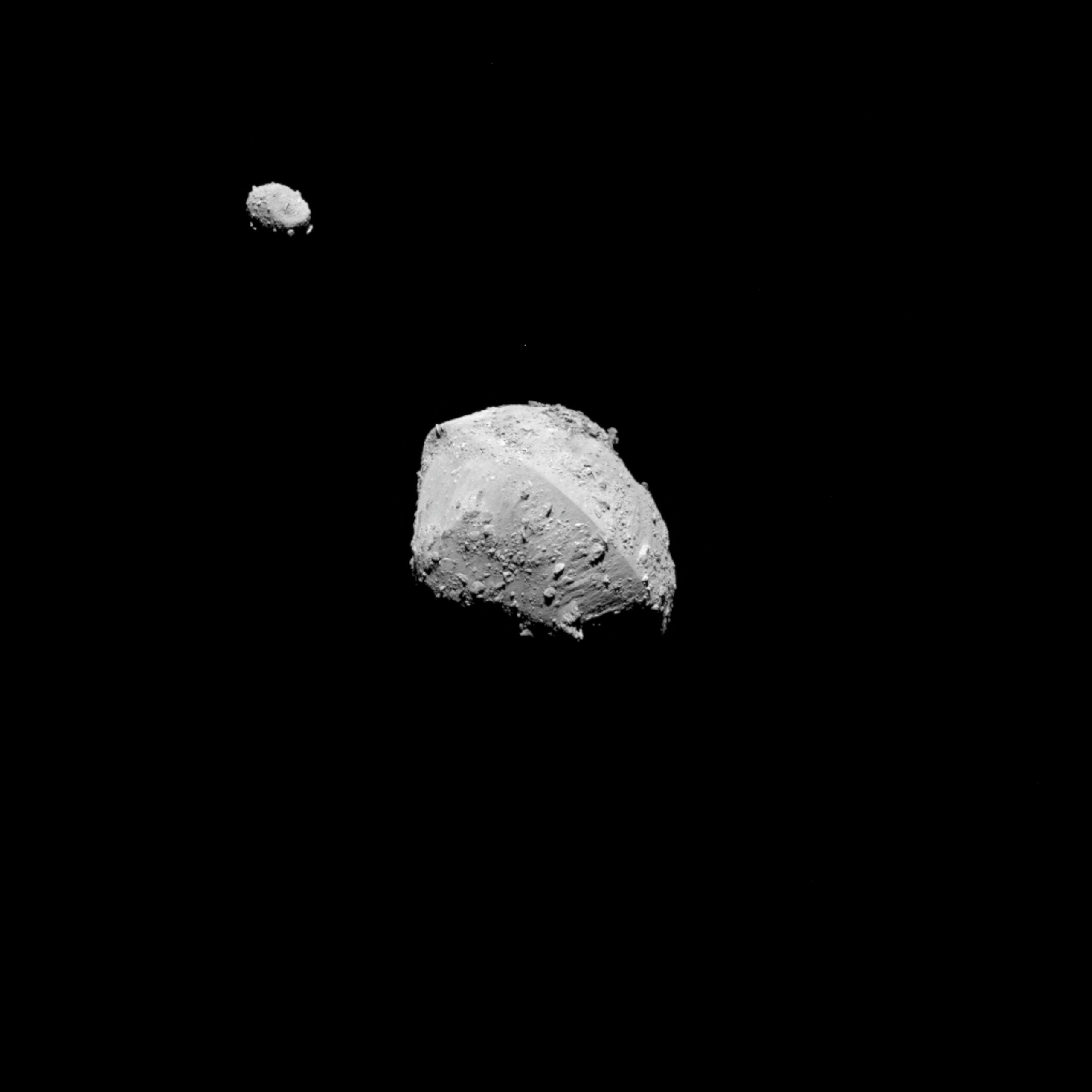
Its Hera spacecraft has returned its first close-up images of Dimorphos, the 151-metre asteroid struck by NASA’s DART probe on September 26, 2022.
Dimorphos orbits the 730-metre-diameter Didymos asteroid in solar orbit, currently 193.5 million km from Earth.
The mission also discovered hundreds of previously unknown boulders, just a few metres across, orbiting the asteroid pair.
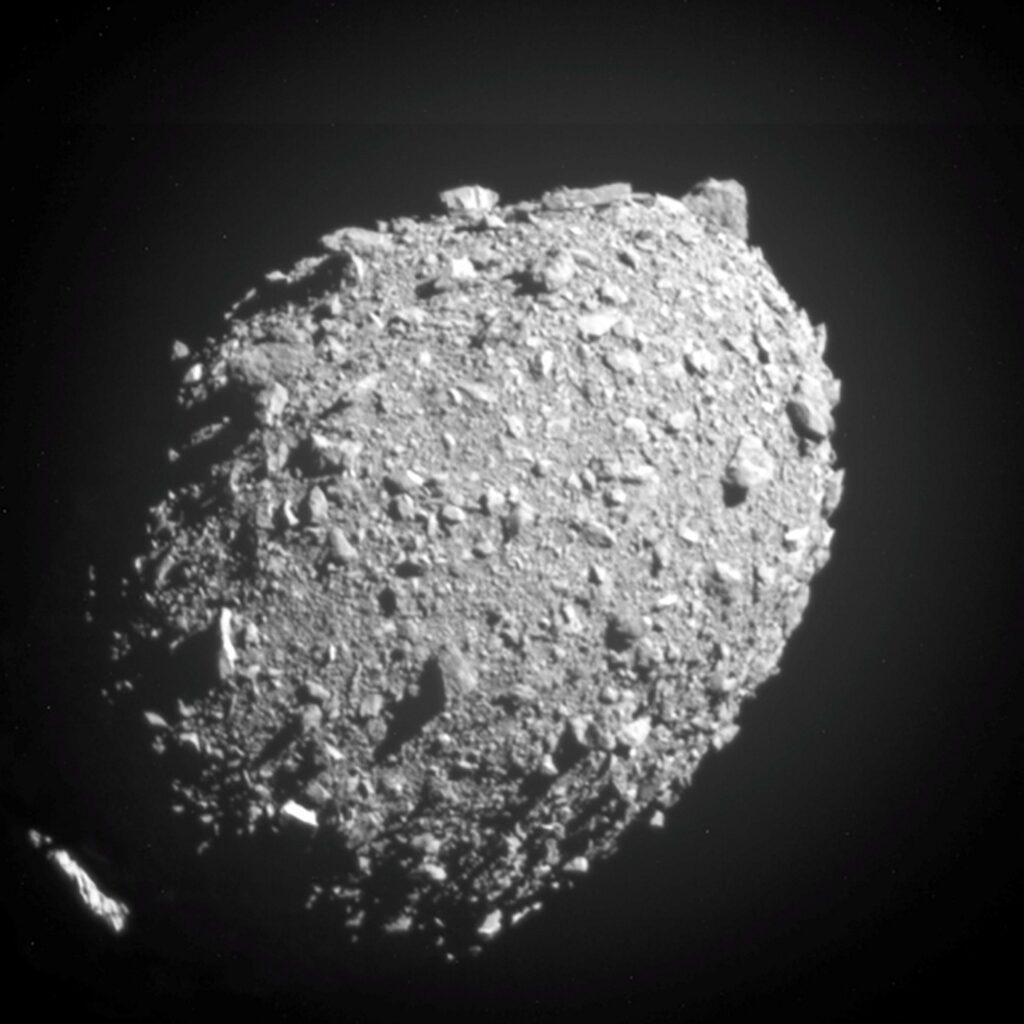
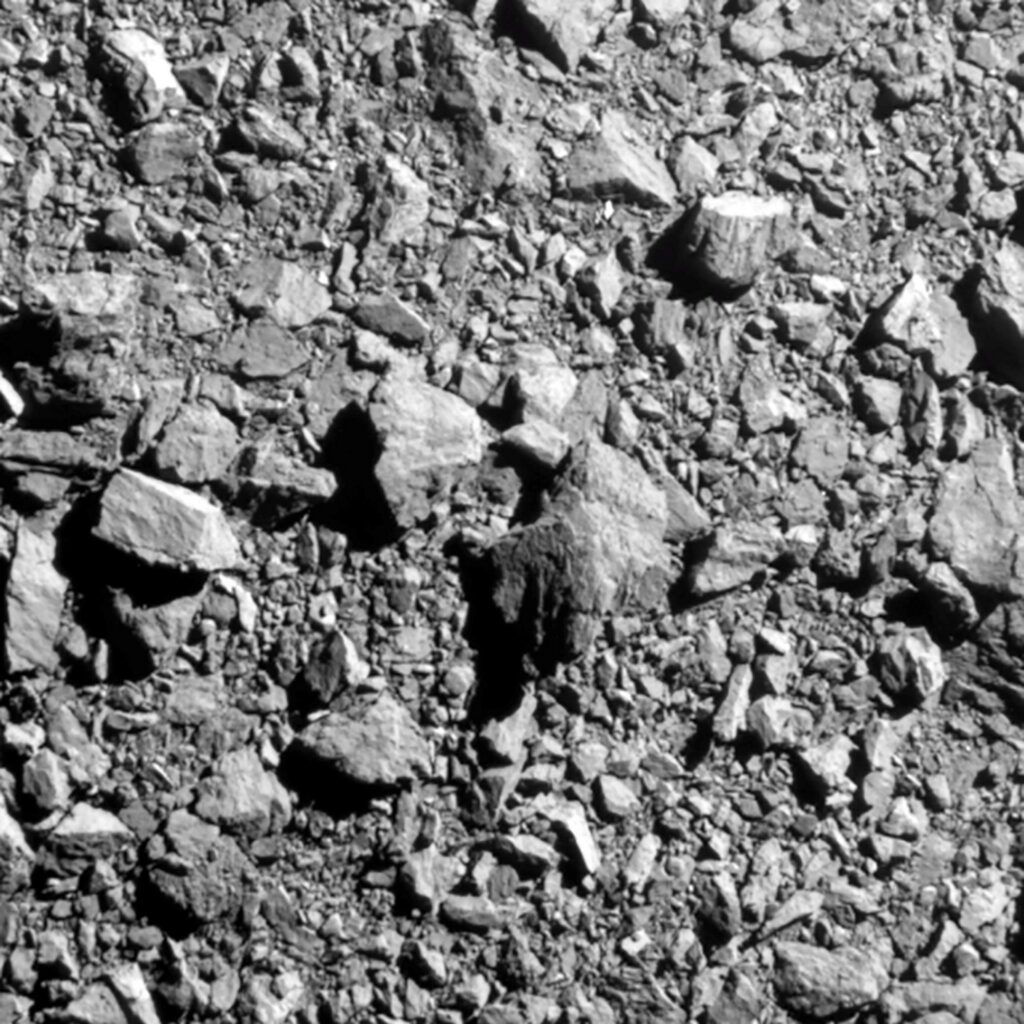
Hera spacecraft reveals effects of NASA asteroid impact
Hera principal investigator Patrick Michel, Director of Research at CNRS / Observatoire de la Côte d’Azur, said: “Scientists debated whether Dimorphos had sustained an impact crater, changed its shape or stayed the same.
“Much to our surprise the answer turns out to be all three at once! The face struck by DART has been flattened into an impact crater the size of a sports stadium, which extends across the asteroid’s entire width.”
Hundreds of previously unknown boulders discovered
Michael Kueppers, ESA’s Hera mission scientist, said: “In addition, as Hera returned more images, it became clear that the DART impact has left Dimorphos tumbling wildly in its orbit.
“Another big surprise is that Hera is showing that the asteroids are surrounded by hundreds of orbiting boulders, just a few metres in size. The team will have to take account of these objects in the coming weeks as the mission moves in closer to acquire higher-resolution images of the asteroids.”
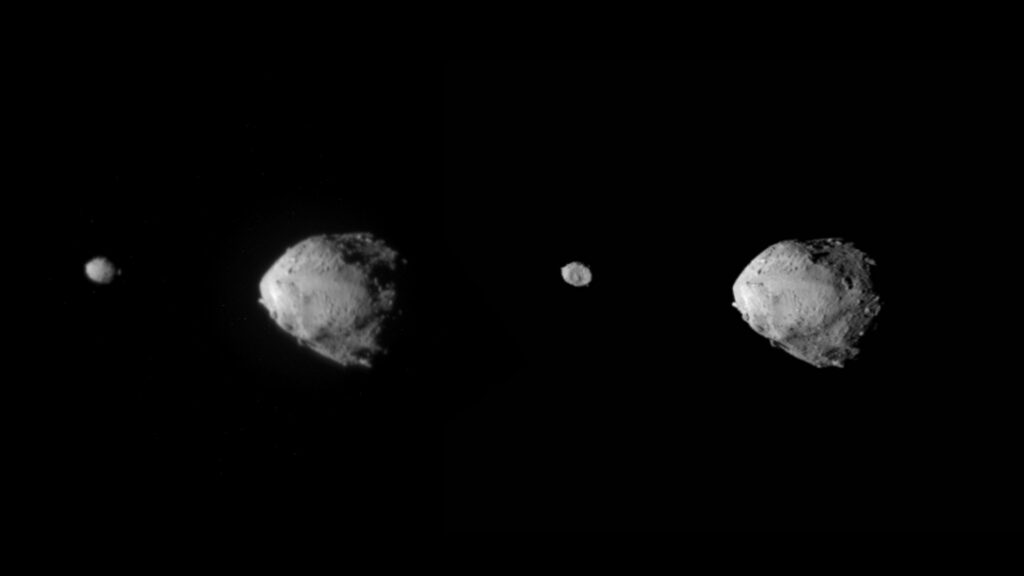
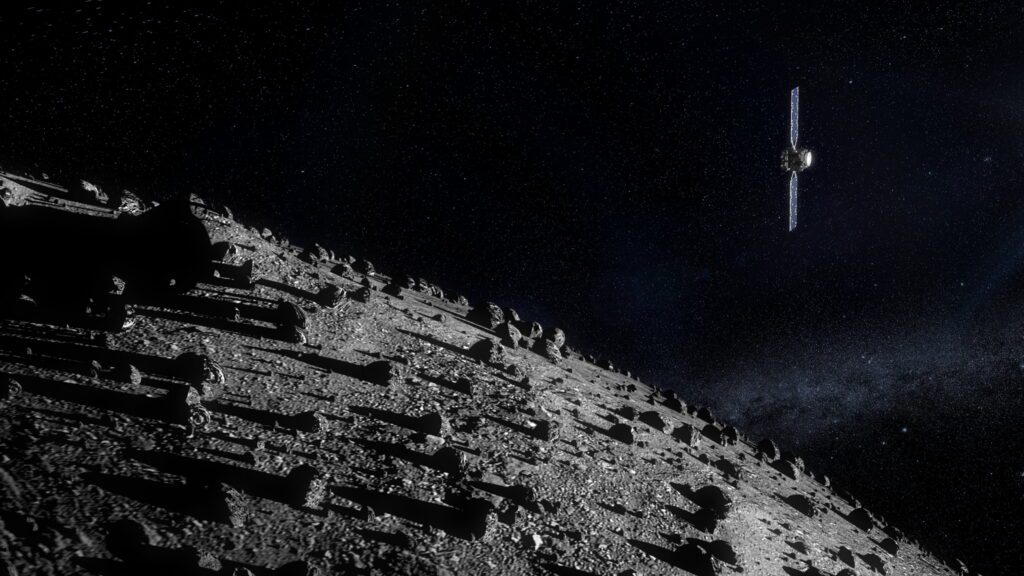
How asteroid deflection could help protect Earth
ESA mission manager Ian Carnelli, who unveiled the images at the dinosaur hall of Berlin’s Museum für Naturkunde on Wednesday (25/11), said: “Sixty-six million years ago, an asteroid impact changed the course of life on Earth. Today, for the first time in history, humanity is validating how to prevent such an event from happening again.
“NASA’s DART mission demonstrated that we can change an asteroid’s orbit. Hera is now revealing what happened to the asteroid itself. By combining these two missions, humanity is taking a decisive step towards making asteroid deflection a reliable tool for protecting our planet.”