


































Hundreds of people are fighting plans for a huge battery storage facility on a country estate where TV drama Rivals was filmed.
More than 800 objections have been made against creating potentially the largest facility in the country at Neston Park Estate.
The historic estate near Corsham, Wiltshire, is owned by Sir James and Lady Venetia Fuller and doubled as The Falconry, the lavish home of David Tennant’s character Lord Tony Baddingham, in Disney+ drama Rivals.
The popular show has recently returned for season two and also stars Alex Hassell as Rupert Campbell-Black, Aidan Turner as Declan O’Hara and Danny Dyer as Freddie Jones.
But one of its locations is “under threat” by a scheme from renewable energy company Grenergy, now wants to build a 450MW Battery Energy Storage System there.
Plans submitted to Wiltshire Council have been met with huge local opposition – with many concerned about the huge scale of the protect and the potential fire hazard around large lithium-ion battery installations.

Residents raise concerns over scale of development
Jeff Fry, 48, who has lived in the village for 47 years, said: “This has been agricultural land as long as anybody can remember.
“There’s nothing anywhere near that qualifies as being a commercial property or industrial property.
“This is greenbelt land. It’s adjacent to woodland. The woodland is the home for quite a large amount of fauna and flora.
“I can remember going down there in the past to watch badgers in their sets. There’s been a lot of bat sightings.
“There’s a proposal now to put 261 battery storage units and each of these is the size of a container. This should have been thrown out two minutes after it arrived on the planning department’s desk.
“But here we are now, many months later, with various applications going backwards and forwards and being modified and all sorts of stories being told.
“You can understand why we’re getting a little bit incensed.”
The site is also the new home of Peter Gabriel’s WOMAD festival, which relocated to Neston Park after leaving Charlton Park near Malmesbury.
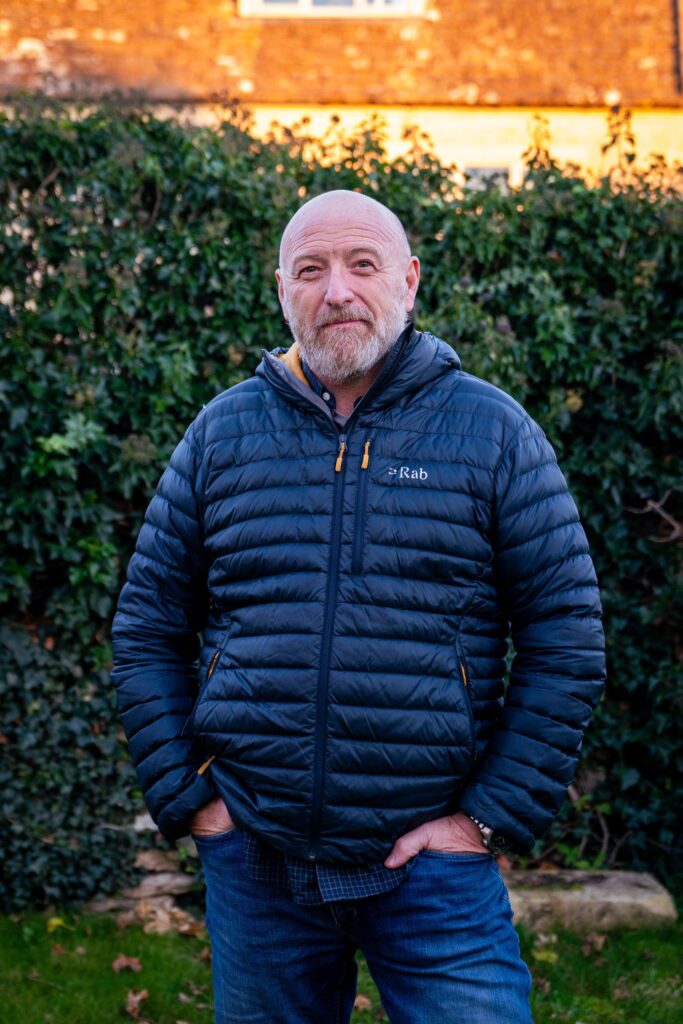
Joe Exon, 60, an engineer, added: “I have spent the last 27 years designing, manufacturing, firing gas detection systems for all kinds of industries. But that includes battery energy storage systems as well.
“So I have a deep understanding and concern when I see big batch energy storage units going next to water supply in housing estates and things like that.
“I think it’s fair to say there’s a lot of misunderstanding about, the safety and environmental impacts of proposals like this.
“The whole community understands that we need green energy but this isn’t green energy.
“This is a simple transaction whereby an energy company takes power out of the grid, produced using traditional hydrocarbon methods.
“They buy it out of the grid cheaply throughout the night, dump it into the batteries, store it, and then put it back into the grid at a much inflated price.
“So there’s there is no green benefit to this. It’s a very large site, 211 containers. It would be the largest in the country.
“There’s a great deal of concern around the noise from all of the cooling systems. About 800 fans used to cool it and light pollution.
“We understand the need for these sort of things. But that location seems wholly inappropriate.
“The applicant themselves have said the decision to put it there is purely commercial. There is no environmental benefit. It’s purely commercial because they need to be close to where the national grid has substations.
“It’s it’s potentially the largest in the country and it’s too big and really not in a good position at all.
“It presents considerable risk to the local environment. God forbid, if there was a fire as well, it would be a real problem.
“There isn’t an adequate water supply and there’s no fire main to the site. The access is very small.
“It’s a big industrial installation really in a, in an agricultural setting.
“It takes takes a lot of energy to cool them, and it makes an awful lot of noise when those fans are going. A lot of the local residents have moved for the piece. That will be gone.
“I don’t know anybody who wants but it did take a while for the local residents to realise just the scale of this.”
“We are going to fight this very hard. I would hope the council will reject this but then I’m absolutely sure that the applicant will turn around and appeal.”
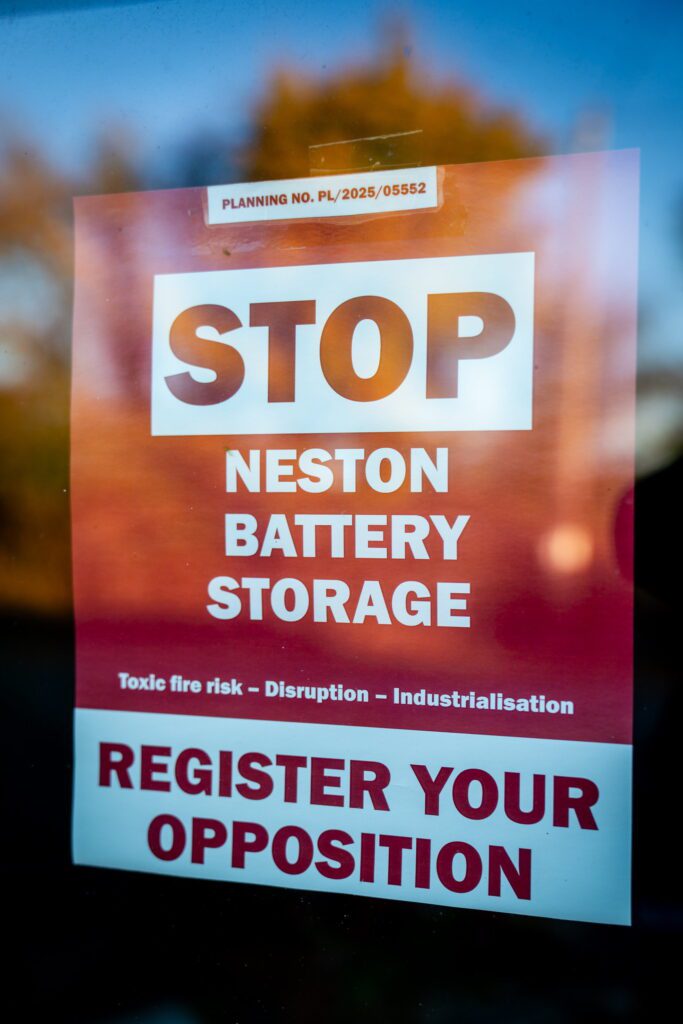
Concerns over battery storage fire risks
The National Fire Chiefs Council says faults can cause thermal runaway, when a battery generates heat faster than it can dissipate it, potentially producing large quantities of toxic and explosive vapours and leading to fire or explosion.
It says such fires are rare but can be difficult to extinguish, can reignite and may burn for hours or days.
Grenergy outlines proposed fire safety measures
Applicant Grenergy insists the risks can be safely managed, saying the proposed 216 battery containers would use lithium iron phosphate technology, which has better thermal stability than some alternative battery chemistries.
The company’s strategy in a serious fire would generally be not to try to extinguish the affected container but allow it to burn in a controlled fashion, while using water to cool neighbouring units and stop the fire spreading.
Two 120,000-litre water tanks are proposed, while contaminated water would be directed to a lined attenuation basin.
Grenergy says firefighters should maintain a safe distance and that affected battery packs may require up to 48 hours to cool before they are approached.

Fire service response and next steps for planning application
Dorset & Wiltshire Fire and Rescue Service says it has continued to work with the developer.
Its response did not object, saying the site’s internal road network offered “reasonable tactical options” for firefighters, but strongly supported planning conditions ensuring fire safety measures were built into the development.
The scheme would operate for 35 years before being removed, according to the application, with Grenergy arguing battery storage is essential to store surplus renewable electricity and release it when demand is higher.
The public consultation period earlier this month and Wiltshire Council will determine the application.